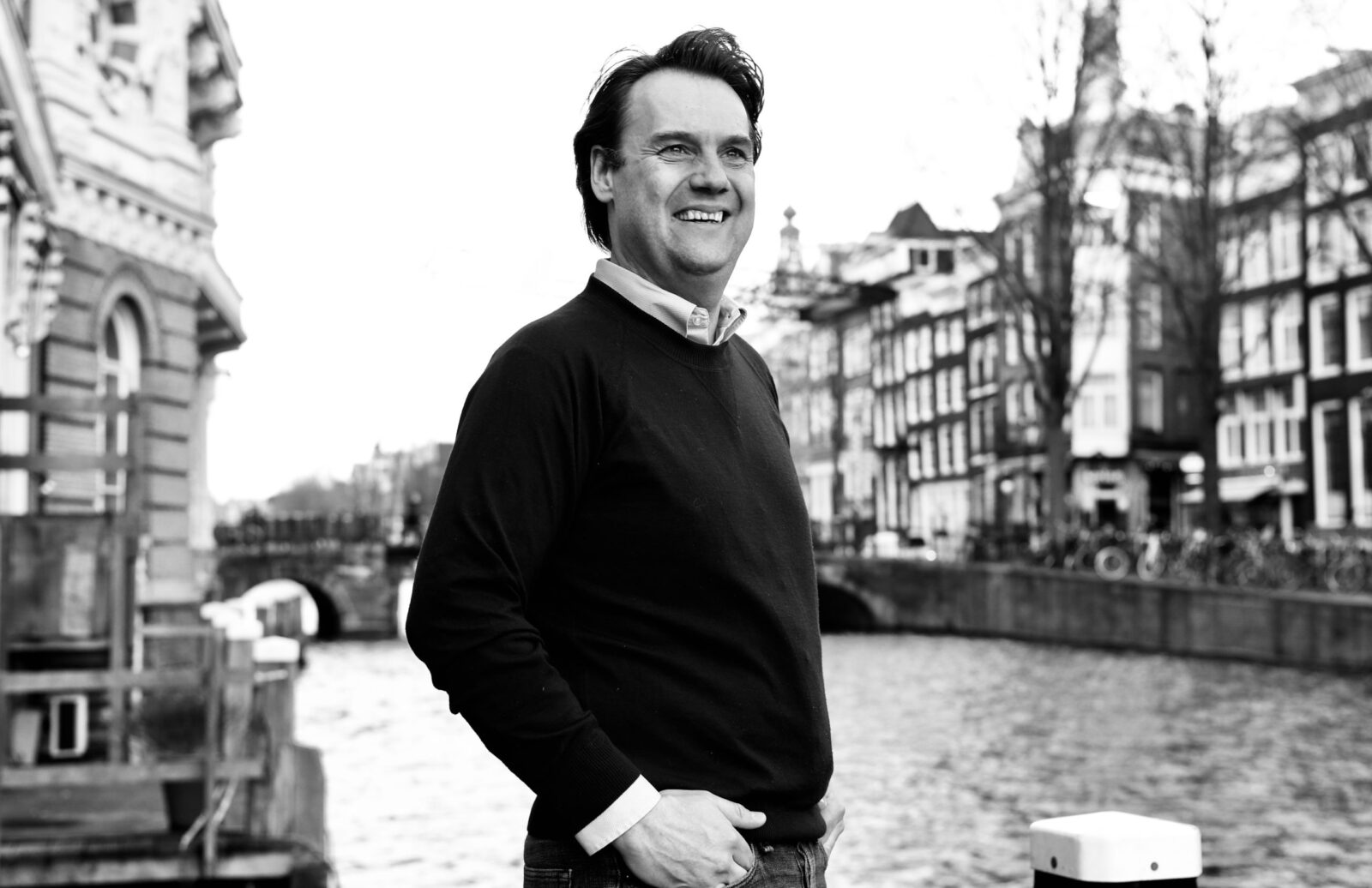
About Arnout.
#1 SEO · #1 Data & Analytics · #2 International SEO: independent Benelux ranking by Eikhart (2025)
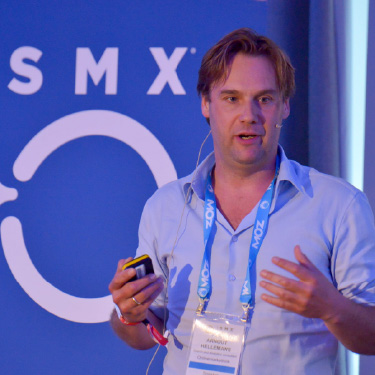
I Was Never Really an SEO
Twenty years of figuring out why things work, why they don’t, and why the interesting problems rarely fit inside one discipline.
In 2005, I was hired as a marketer despite knowing very little about marketing.
I didn’t really understand the obsession with brand colours and logos, and when someone first showed me Google Analytics I wasn’t particularly impressed.
SEO changed that.
Not because I wanted rankings.
Because people kept telling me what Google wanted and couldn’t explain why.
At Moviq, we were working with an SEO agency. They told us to buy links, change headings, adjust page titles and do various other things that, apparently, Google wanted.
I kept asking why.
The answers weren’t convincing.
So I started reading the SEOmoz blog and trying to understand it myself.
One of the first things I noticed was that our homepage had six H1s, almost no useful content, and a page title that didn’t really explain what we did.
We changed the structure. One H1, proper subheadings, a page title that actually described the business.
The change wasn’t particularly dramatic.
The result was.
Traffic jumped massively.
I remember being surprised by how large the effect was. We hadn’t rebuilt the website. We hadn’t launched some enormous campaign. We’d changed a few pieces of HTML and suddenly a lot more people were finding us.
We stopped working with the agency.
I didn’t need to tell them why.
We could figure it out ourselves.
That was probably the moment I got hooked.
There was clearly a system here. There were rules. Nobody completely knew those rules, but you could observe what happened, form a hypothesis, change something and see whether the data agreed with you.
Google was a black box.
And I liked finding loopholes in black boxes.
I had probably always thought this way
Looking back, SEO didn’t create that part of me.
It gave it somewhere useful to go.
I remember a maths exam when I was younger where I solved a problem in a completely different way from the method we were supposed to use.
My answer was correct, assuming the calculator handled the value of pi accurately enough.
It wasn’t the simple route.
But it solved the problem.
I’ve always been quite stubborn like that.
When somebody tells me something can’t be done and I’ve decided that it can, that becomes an emotional trigger.
I listen to the story. I look at what they’ve tried. I look at the context. Somewhere in my head there is a calculation happening.
And sometimes the answer is simply:
Yep. That can be done. It must be possible.
Then I go and try to figure out how.
Sometimes I’m wrong.
Sometimes I think something should be easy and disappear into a rabbit hole for three days on something I thought would take half a day.
That’s terrible consulting economics.
But quite often, that’s also how I find the answer.
The question was never really “how do I rank?”
It was always more interesting to understand why something ranked.
Rankings were useful as proof of a theory.
If I thought page titles or headings mattered, I could change them and see what happened.
Later, that became much more complex.
I became interested in core updates, knowledge panels, how updates settle, what user signals might be doing, what changes in a SERP meant and what apparently unrelated changes might actually be connected.
The way I work isn’t particularly linear.
From the outside it can probably look like:
data -> diagnosis -> solution
Inside my head it is more like:
rendered page -> source code -> SERP -> something strange -> screenshot -> trend -> another SERP I remember -> hypothesis -> three more hypotheses -> rabbit hole -> pattern -> test -> answer
I am very visual.
I look at SERPs. I look at pages. I look at why things are going viral. I talk to people. I notice things.
Then, sometimes much later, two or three of those things connect.
More traffic is usually the wrong question
Over time, SEO also taught me something else:
More traffic is often not the problem.
When someone tells me:
“We need more traffic.”
My first question is usually:
“Do you need more traffic, or do you need more business?”
The answer is always business.
And there are many ways to get there.
If your positioning is wrong, your pricing is wrong, the product benefits aren’t clear, the website is slow, the user doesn’t understand why they should buy from you, or the product doesn’t really fit the market, then more traffic just sends more people into a leaking bucket.
You need to fix that first.
Then traffic becomes a multiplier.
A lot of that thinking developed while I was working on Book Amsterdam Apartments.
SEO could bring people in, but bringing people in wasn’t enough.
The right bookings mattered.
Pricing mattered.
Positioning mattered.
Answering the questions people actually had mattered.
Around 2013 and 2014, I started going to CRO conferences and events such as Conversion Hotel and similar gatherings.
That opened up another discipline that felt completely logical to me.
SEO, analytics and CRO never really felt like separate jobs.
They were different ways of looking at the same problem:
How do we improve the website and, ultimately, the business?
Today I think those boundaries are disappearing even further.
SEO, AI, CRO, analytics, product and technology increasingly need to be aligned.
Rankings don’t pay the bills
One project made this particularly clear.
A bank had a problem: too many customers were calling.
The question was essentially:
Why do they keep calling us when they can self-serve?
My first thought was pretty simple.
Nobody likes calling a bank.
If someone has a problem, they are probably going to Google it before they pick up the phone.
So we collected the questions people were asking the call centre.
Then I started Googling them.
And the search results were effectively telling people:
Call the bank.
So of course they called.
We changed the content so people could actually find out how to self-serve: how to order a new card, solve the problem themselves, or complete whatever task they were trying to complete.
The calls dropped.
Was that an SEO problem?
Yes.
Was it a content problem?
Yes.
Was it a customer-service problem?
Yes.
Was it a product problem?
Also yes.
Mostly, though, it was a business problem.
That is why I struggle a little when people describe me as a pure SEO.
I don’t look only at rankings.
Rankings don’t pay the bills.
Business does.
Then ADHD explained a lot
I had been working this way for roughly fourteen years before ADHD entered the picture.
In 2019 I self-diagnosed.
In 2020 I got formally diagnosed.
And suddenly a lot of missing pieces made sense.
My whole life made more sense.
The funny thing was that when I told people, many of them reacted with some version of:
“Yes, obviously.”
And my reaction was:
“What the hell? Why did nobody tell me?”
I don’t think of ADHD as some kind of uncomplicated superpower.
For me, it is more accurate to describe it as:
An expensive brain that can be extraordinarily good under the right conditions.
The expensive part is real.
If something doesn’t interest me, I can struggle enormously to make myself do it.
Invoices.
Writing.
Routine tasks I know perfectly well I should complete.
Meanwhile, give me a difficult problem that I believe can be solved and I can disappear into it.
I can have a gazillion tabs open across several browser windows, multiple monitors, screenshots everywhere, rendered and unrendered pages, SERPs, data, drawings and hypotheses.
I like drawing because I often see the shape of something before I can explain it neatly.
I also like talking things through.
Publishing is different.
Publishing is freaking scary.
Speaking feels flexible. You can explain something, qualify it, adjust it when you see how someone reacts.
Writing feels permanent.
There is suddenly proof of what you thought.
Maybe that is also connected to having been told “no” a lot when I was younger.
If you never put something on paper, you can always explain it differently later.
That may also be part of my imposter syndrome.
I can stand on a stage and talk.
I find it much harder to publish something and say:
This is what I think.
The commercial downside of curiosity
There is another part of this that doesn’t fit very well into the “ADHD is a superpower” version of the story.
Curiosity is not always commercially sensible.
Sometimes I tell a client something should take half a day.
Then I find something interesting.
Then another thing.
Then a hypothesis doesn’t work.
Then I find an anomaly.
Three days later I finally understand the problem.
The actual fix might take one hour.
But the one hour isn’t really what the client is paying for.
They are paying for finding the answer.
That has taken me a long time to become comfortable with.
The only real solution is to price accordingly.
You shouldn’t charge for the final hour of implementation if the valuable part was the three days it took to understand what needed implementing.
I’ve also historically overdelivered.
I don’t love difficult pricing conversations.
I’ve taken on work I shouldn’t have.
I’ve kept clients longer than I should.
I like to be liked.
Getting older has made that easier to manage.
But liking to be liked is different from avoiding the conclusion.
If I think the problem is your product, I will tell you the problem is your product.
If I think SEO isn’t what you need yet, I’ll tell you that too.
Sometimes the best SEO advice is:
Don’t do more SEO yet.
Get the basics right first.
AI makes this brain more useful
AI has changed the way I work again.
Not because it replaces the thinking.
For me, it helps structure it.
My thinking is naturally chaotic.
I can look at a rendered page, source code, several SERPs, screenshots, a trend, something I saw months ago and a completely unrelated observation, and suddenly have ten things I want to investigate.
AI is an extremely useful sparring partner for that.
I can share a hypothesis.
Push against it.
Ask for structure.
Ask what I might be missing.
Then come back with another hypothesis.
This article itself is an example.
The thoughts were already there.
AI has helped me organise them.
I think getting the most out of AI requires a particular skill set.
You need to know what you’re actually looking for.
Anyone can ask:
“Give me tips for Sicily.”
But the quality of the answer changes if you explain that you’re travelling at a particular time, with a family of three, the parents love food, one child is a picky eater, you like nature, you’re adventurous, you don’t want to spend all day driving, and so on.
The machine can only work with the problem you give it.
That makes the ability to frame the problem incredibly important.
I suspect some of the traits that have helped me in SEO also make AI particularly useful to me: visualising an outcome, connecting things that don’t initially look connected, forming hypotheses and knowing which follow-up question I actually want answered.
That does not mean I think AI is automatically a good thing.
Far from it.
The new black box
The thing that excites me most about AI is its potential for good.
Medical research.
Science.
Accessibility of information.
Giving people capabilities that previously required expertise or resources they didn’t have.
In that sense, it could become a huge equaliser.
But I am not convinced it will.
The thing that scares me is that much of this capability is privately owned.
These systems can collect enormous amounts of information about us.
They can be used to target and influence people.
And at the extreme end, AI is already being used in warfare and is moving towards systems that can participate in decisions about who lives and who dies.
Add robotics to that and the consequences become physical, not just informational.
Twenty years ago I became fascinated by a black box that increasingly determined what information people found.
Today we’re building black boxes that may increasingly determine what information people believe, what decisions get made and what actions machines take in the physical world.
That makes the question why more important, not less.
Looking back
Looking back, what seemed like a fairly random career doesn’t feel random anymore.
I was never particularly interested in staying inside one discipline.
SEO just happened to be the first place where technology, marketing, products and people collided in a way that kept my brain interested.
I was a nerd at heart.
I could spend hours gaming, but I also loved playing field hockey and had loads of friends.
That ability to move between different worlds turned out to be useful.
I enjoy talking to developers.
I enjoy understanding customers.
I enjoy commercial problems.
I enjoy technical ones.
And I like the problems that sit somewhere in between.
Today those boundaries are disappearing even further.
SEO, CRO, analytics, product, technology and AI increasingly touch the same challenge:
understanding what people need, understanding the systems sitting between them and that need, and figuring out what needs to change.
That’s why “SEO” has never felt like the whole story.
I look broader than rankings.
And I care deeply about the result.
Give me a problem nobody can explain and I’ll try to explain it.
And if I think it can be solved, telling me it can’t be done is probably the quickest way to make sure I’ll try.
What people say.
Arnout is incredibly thorough and loves a good tech SEO mystery! We brought him in to help consult on a tricky (and very poorly documented) SERP feature that had gone missing following a site migration. We had tried everything we could think of to resolve the issue, but Arnout still managed to come in with fresh ideas and point us in a new direction that ultimately uncovered the likely culprit. He was also exceptional at speaking to both the development team on a technical level and the less developmentally minded people on the team so that everyone understood what the situation was, and how to move forward.
 Joshua DeGrasse-Baumann
Customer-Focused SEO Strategist May 20, 2025, Joshua worked with Arnout on the same team
Joshua DeGrasse-Baumann
Customer-Focused SEO Strategist May 20, 2025, Joshua worked with Arnout on the same team
Arnout probably knows 10x the SEO than 99% of SEOs out there. And that's not even his best quality. Arnout cares. For his clients, the work he delivers, for actually making things work. And this makes all the difference when it comes to working with him: Arnout understands limitations, opportunities, organizational structure and he actually cares so much that he finds the best solution regardless of the scope. I learned more from working with Arnout on an SEO project for a few weeks than from years of practicing SEO. I am deeply grateful for his expertise, dedication and generosity with his time and insights. And I'm looking forward to working together again.
 Erika Varangouli
Organic Growth Leader | SEO, AI Search & Brand Strategy | Head of SEO & AI Search @ Riverside July 12, 2024, Erika was Arnout's client
Erika Varangouli
Organic Growth Leader | SEO, AI Search & Brand Strategy | Head of SEO & AI Search @ Riverside July 12, 2024, Erika was Arnout's client
Today, my coworker and I had a 7 hour long, hands-on, Technical SEO and CRO training by Arnout. Truly learned a lot and had a blast at the same time. This guy's energy and knowledge is unrivaled. His teaching style is also great. He's patient, allowing us to think first, guiding the thinking process before providing the answers. Definitely advise anyone who is serious about learning more about SEO or marketing in general to book a session with Arnout.
 Ramon den Hartog
Accountmanager bij Embrace – The Human Cloud | #Software #LeanSixSigma #Accountmanagement #Woningcorporaties October 10, 2023, Ramon worked with Arnout on the same team
Ramon den Hartog
Accountmanager bij Embrace – The Human Cloud | #Software #LeanSixSigma #Accountmanagement #Woningcorporaties October 10, 2023, Ramon worked with Arnout on the same team
I was a participant in one of his session, he helped me to see marketing from another prospect since it is not about only ads and content. He helped me to know the customer behavior and improved my knowledge regarding SEO, he proposed SEO like no one other did. Thank you
 Ali Alkahlout
Performance Marketing Specialist | Growth Manager November 1, 2020, Ali was Arnout's client
Ali Alkahlout
Performance Marketing Specialist | Growth Manager November 1, 2020, Ali was Arnout's client
Arnout is highly-respected in the SEO industry, not only as a professional, but also on a personal level as someone who has so much passion for what he does and is always willing to share his knowledge and help others. I had training sessions with Arnout and his knowledge in analytics and ability to find insights in data is astounding. Every time I speak to Arnout, I always come away feeling smarter and having learned something new. Apart from analytics, Arnout's strategic thinking and creative approach to SEO and online marketing make him one of the best minds currently in the industry.
 Shelley Walsh
Managing Editor at SEJ | IMHO & Pioneers Show | ShellShock Ltd April 8, 2020, Shelley worked with Arnout but they were at different companies
Shelley Walsh
Managing Editor at SEJ | IMHO & Pioneers Show | ShellShock Ltd April 8, 2020, Shelley worked with Arnout but they were at different companies
Let's talk.
Ready to get more from your website? Let's start with where it matters most.