
The Row’s Design Philosophy, Examined: Why Less Is More
More than two decades have gone by since The Row set out proving that restraint can be its own form of luxury. It was founded by Mary-Kate and Ashley Olsen in 2006, and it earned its name not through flashy insignia but through disciplined cut, exacting proportions, and materials chosen for how they age rather than how they photograph. Walk into any conversation about quiet luxury and The Row will surface within the first few sentences, because it more or less authored the playbook the rest of the industry still consults. The brand’s design ethos comes down to one simple idea: eliminate whatever isn’t essential to the garment or object, leaving only what stands the test of time. That approach extends across ready-to-wear, outerwear, and especially the accessories category, where the row bags serve as a kind of quiet-status code. To grasp why less is more at The Row, one must examine construction decisions, material sourcing, and the slow, near-architectural process behind every release.
Tracing the Origins of a Minimalist Philosophy
When the Olsens launched The Row, fashion was awash in maximalism, loud branding, and rapid turnover. They responded in a pointedly contrarian way: garments with barely any visible hardware, monochromatic color schemes, and silhouettes that were developed over months instead of mere weeks. That unhurried, methodical approach became the label’s hallmark, and it is why The Row comes up often in conversations about the row fashion as its own distinct category rather than a fleeting trend. The founders have described their ambition to design pieces people would still want to wear even a decade later, which meant rejecting anything that felt disposable. Such a philosophy called for sourcing partnerships with ateliers in Italy and the UK capable of hand-finishing details most consumers never consciously notice but instinctically feel. Even seam allowances, lining weights, and top-stitching tension are adjusted with a precision rarely seen beyond true couture ateliers. What emerges is a collection in which minimalism isn’t a stylistic shortcut but the product of enormous, invisible effort.
The Reason the Bags Became the Brand’s Hallmark Signature
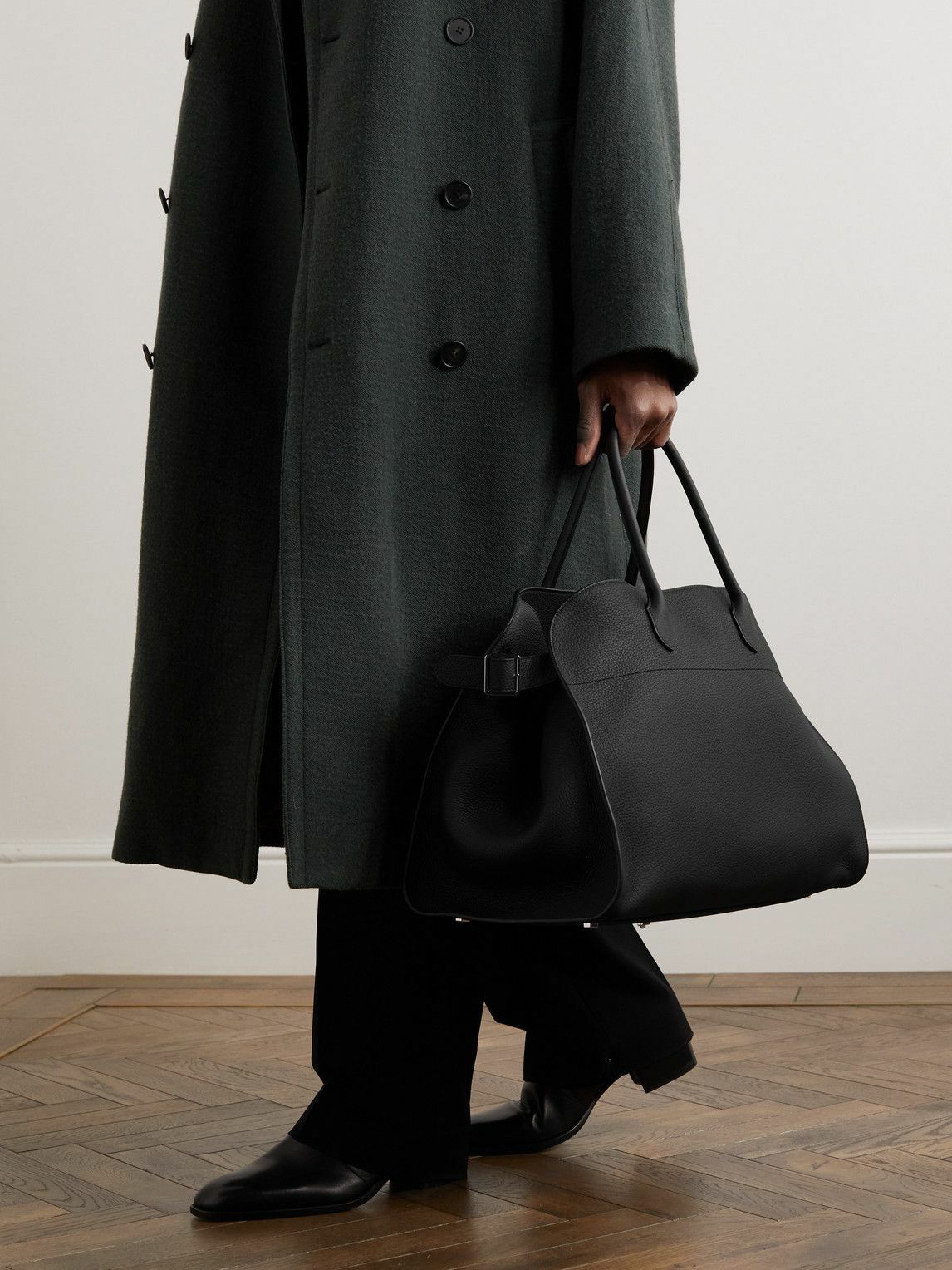
Nowhere is this philosophy more plainly visible than in the row handbags, which have without fanfare turned into some of the most sought-after accessories in modern-day fashion. Unlike bags built rowbag.com/tote-bags around a monogram or a hardware motif, the row bag designs are built purely around shape, proportion, and the leather’s own inherent quality. The Margaux, generally regarded as the label’s signature style, reads differently each time, its loose, unstructured form shifting with how it’s held, folded, or packed. A silhouette like that holds up only when the leather is of the highest order, since there is nothing in the way of hardware or logos to draw attention away from any flaw. Tote offerings from the row abide by this same reasoning: oversized, minimally adorned, and constructed from vegetable-tanned or napa leathers chosen for how they develop a deep, aged patina over time. People shopping around for top row bags repeatedly point out that the styles read more as long-term investments than seasonal purchases, and the secondary market confirms this, with several styles holding 60 to 75 percent of retail value years after release.
The absence of visible branding also changes these bags are read in social contexts. Only those who already know what they’re looking at will recognize a row bag — and that’s exactly the intent. This has made the top row bags into something of an insider signal within fashion circles, prized specifically because they do not shout. That subtlety demands more from the materials and construction, since there is no way for a flaw to stay hidden.
Reading the Materials: Hide, Hardware, and Craftsmanship
The Row’s material choices reveal just how much technical thought underlies its pared-back appearance. Hides are chosen not just for softness but for how they will look after 500 uses, which is a far different consideration than choosing leather for how it looks on day one. Hardware, where it exists at all, is usually solid brass or matte-finished metal rather than anything shiny or logo-stamped, chosen so it will not date or flake. Stitching is often done in tonal thread specifically so it disappears into the leather rather than creating contrast lines. This is a significant shift from bags built with decorative stitching or contrast piping, and it demands highly skilled leather cutters, since any irregularity becomes immediately visible without a busy pattern to mask it. The row bags overview that circulates among resale experts and personal shoppers consistently highlights this build standard as the primary reason these pieces hold high resale value. What buyers are paying for isn’t a logo stamped on fabric — it’s the leather and workmanship that were expensive to create from the outset.
Weighing Up The Row’s Core Bag Styles Against Each Other
For shoppers working out how to pick between the brand’s most in-demand silhouettes, a head-to-head look helps make clear the day-to-day differences in how every style is designed to function on a daily basis.
| Style | Silhouette | Suited To | Rigidity |
|---|---|---|---|
| Margaux | Relaxed, open-topped tote | Everyday use, commuting to work | Unstructured |
| The Row Tote Bag (classic) | Generously sized, boxy-bottomed shape | Journeys and heavier everyday carry | Partially structured |
| Top-handle styles built compact | Smaller, boxier frame | Nighttime outings, pared-back basics | Structured |
Rather than being a single blueprint scaled up or down, the row bags—as this range makes clear—represent a spread of deliberate engineering choices, each suited to its own use case. A buyer hunting for a daily-use tote will value very different things than one seeking a small evening piece, and the brand’s collection mirrors that gap while still holding onto its essential understated style.
Locating Real, Verified Pieces and Working Through Row Sale Events
Since The Row rarely discounts steeply or runs promotions often, inquiries about where to buy the row margaux bag and comparable styles usually center on authorized sellers rather than chasing markdowns. Sales happen via the brand’s own boutiques and a select group of approved department stores and high-end e-commerce sites, a setup that helps safeguard quality control and resale value alike. On the occasions a row sale happens, it’s usually linked to end-of-season stock at authorized multi-brand sellers rather than the brand’s own channels, and certain colorways or leathers may be hard to find. Caution is warranted around third-party sellers offering steep markdowns on the row bag styles, since counterfeits have grown more convincing on the secondary market as demand for these pieces has climbed. Practical ways to confirm a piece is genuine before buying on resale platforms include checking stitch consistency, hardware weight, and the interior lining stamp. For those specifically hunting the Margaux, contacting an authorized boutique directly is often more reliable than searching broadly online, since stock moves quickly and is not always reflected accurately across every retailer’s website.
Unpacking What “Less Is More” Truly Means for Durability Over Time
For anyone weighing up whether to invest in the brand, that nuance counts: The Row’s minimalism is ultimately a long-term play, far from being a matter of taste. Pieces and bags alike built with fewer ornamental details have fewer failure points over time, a fact that is a pragmatic point just as much as a stylistic one. A logo can feel dated within a few seasons; a sharply cut shoulder seam or a richly aged leather tote generally does not. This is why resale communities discussing the best row bags so often frame their reviews around durability and long-term versatility rather than trend alignment. The label has, in effect, carved out a category where restraint acts as a hedge against going out of style. For those contemplating a 2026 investment purchase, this line of thinking deserves serious consideration, given that the thinking that shapes the design is inseparable from how much the pieces are worth years later. For The Row, doing less has never meant making less effort. It has only ever meant nothing left to distract from the making itself.